FREELANCE TIPS
Wondering if you should charge upfront? Here's when to ask for a deposit, how much to charge, and exactly what to say to clients.
Published on
Written by

Balint Bogdan
You landed a new project. The client seems great. But you've heard the horror stories about freelancers who did all the work and never got paid.
Should you ask for money upfront?
Short answer: yes.
Here's why, and how to do it without making things awkward.
Why deposits matter
A deposit does three things for you.
First, it protects you from non-payment. If a client disappears halfway through a project, you at least have something for your time. The full amount you're owed? No. But not zero either.
Second, it creates commitment. A client who has already paid money is invested in the project succeeding. They're more likely to respond to your emails, provide feedback on time, and stay engaged throughout the process.
Third, it helps your cash flow. Freelancing often means waiting weeks or months to get paid. A deposit gives you money now, when you need it, rather than after you've done all the work.
How much to charge
The standard range is 25% to 50% upfront.
For most projects, 50% upfront and 50% on completion works well. It's simple, easy to explain, and splits the risk evenly between you and the client.
For larger projects that span multiple months, consider milestone payments instead. Something like 30% upfront, 30% at the midpoint, and 40% on completion. This keeps money flowing throughout the project and protects both sides.
For smaller projects under $1,000, you might ask for 100% upfront. The administrative overhead of splitting a small payment isn't worth it, and serious clients won't mind paying in full for a quick project.
When to require a deposit
Always with new clients. You don't know them yet. They don't know you. A deposit is a reasonable way to establish trust on both sides.
Always for large projects. Anything over $2,000 or that will take more than a few weeks deserves a deposit. The risk is too high otherwise.
Consider skipping deposits for repeat clients you trust. If you've worked with someone multiple times and they always pay on time, you might not need a deposit for every project. But even then, it doesn't hurt to ask.
Consider skipping deposits for established companies with clear payment processes. Large corporations often can't pay deposits due to their internal systems. They also have reputations to protect and are generally reliable payers. Use your judgment.
What to say
You don't need to over-explain or justify yourself. A deposit is standard practice. Treat it that way.
In your proposal or contract:
"Payment structure: 50% deposit due before work begins, 50% due on project completion."
When a client asks why:
"I require a deposit for all new projects. It helps me manage my schedule and ensures we're both committed to the work. Once I receive the deposit, I'll add you to my calendar and we can get started."
If a client pushes back:
"I understand. The deposit is standard for my business, but I'm flexible on the structure. Would 30% upfront work better for you?"
If they flat out refuse:
This is a red flag. A client who won't pay any deposit is telling you something. Maybe they've been burned by freelancers before. Maybe they're not serious. Maybe they have no intention of paying.
You can try to negotiate, or you can walk away. Trust your gut.
The objection you're afraid of
New freelancers worry that asking for a deposit will scare off clients. "What if they think I don't trust them?"
Here's the reality: professional clients expect deposits. They've worked with freelancers and contractors before. They know how this works.
In fact, not asking for a deposit can make you look inexperienced. If every other freelancer they've hired required 50% upfront and you don't, they might wonder why.
What about bigger companies
Large organizations often have policies that make deposits difficult. They pay on Net 30 or Net 60 through their accounts payable system, and they can't just send you money before you start.
In these cases, you have options.
Ask if they can do a purchase order that guarantees payment. This isn't a deposit, but it's a commitment.
Ask if a smaller deposit is possible. Even 10% or 20% is better than nothing.
Ask for a shorter payment term. If they can't do a deposit, maybe they can pay Net 15 instead of Net 30.
Accept it and plan accordingly. Sometimes working with a big company is worth the slower payment. Just make sure you have the cash flow to handle it.
How to collect the deposit
Make it easy. Send a deposit invoice immediately after the client agrees to the project. Include a clear due date and a direct link to pay.
Don't start working until the deposit clears. This sounds obvious, but many freelancers get excited about a new project and begin before the money arrives. Resist the urge. The deposit is the starting line.
Once the deposit is paid, confirm it and outline next steps:
"Got it, thanks! I'll get started on [project] this week. You can expect the first draft by [date]. Let me know if you have any questions in the meantime."
One scenario to avoid
A client asks you to start immediately because the project is urgent. They promise the deposit is coming, they just need to get it approved internally.
Don't do it.
Urgency is not your problem. If the project is truly urgent, they can expedite the deposit. If they can't, that tells you something about how this project will go.
Protect yourself first. The work will still be there once the deposit clears.
The bottom line
Asking for a deposit is not greedy. It's not unprofessional. It's how business works.
You're investing your time and skills in someone else's project. It's reasonable to ask them to invest something too.
Set the expectation early, be confident when you ask, and don't start work until the money arrives.
Need a better way to manage your business?
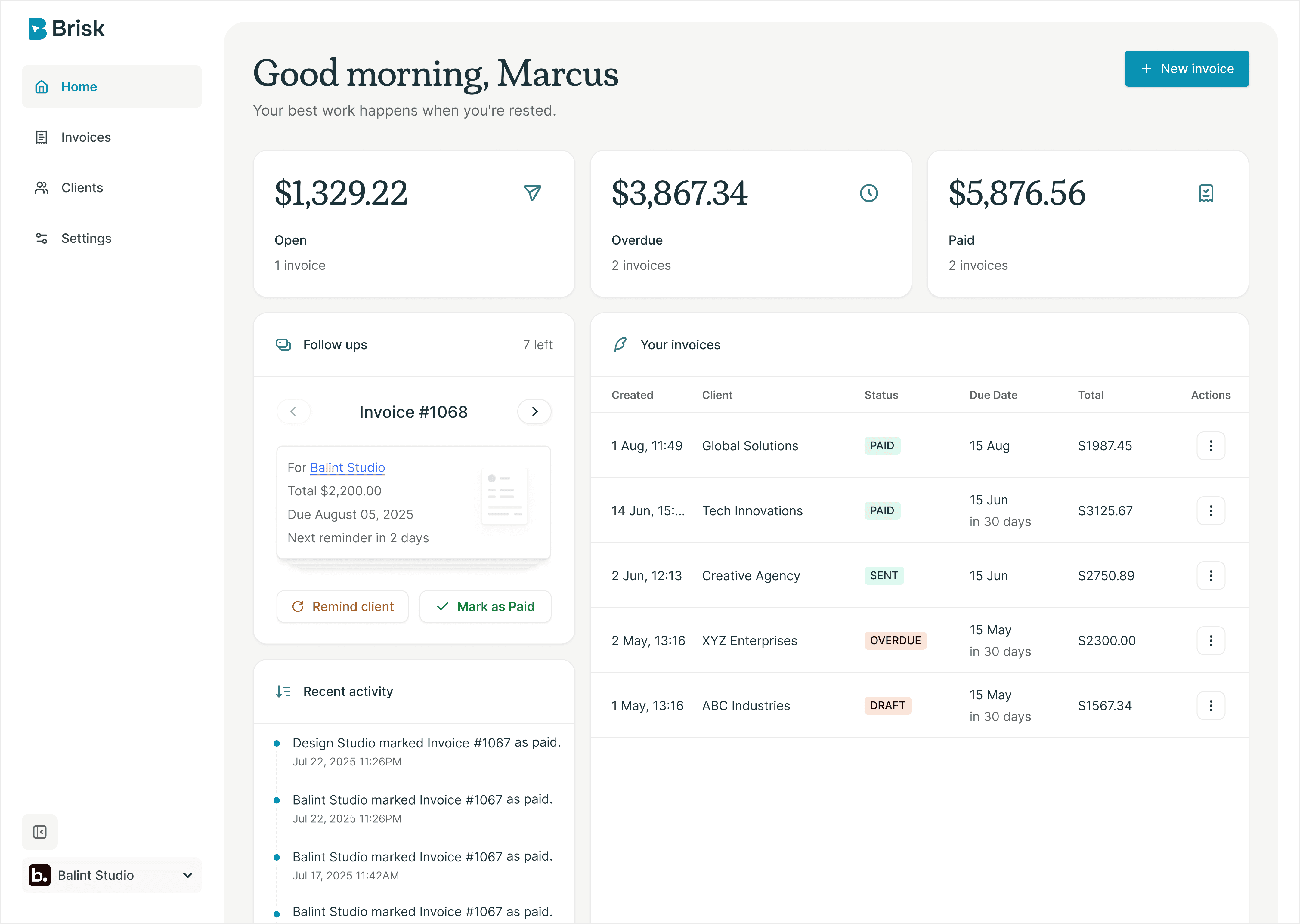
Brisk handles the busywork, invoicing, reminders, follow ups, so you can focus on the work that actually pays.

"I used to spend Sunday nights sending reminders. Now I don't think about invoices at all."
Bianca Serban, Product designer
Related Posts
Continue reading
More on freelancing, business, and building Brisk.